
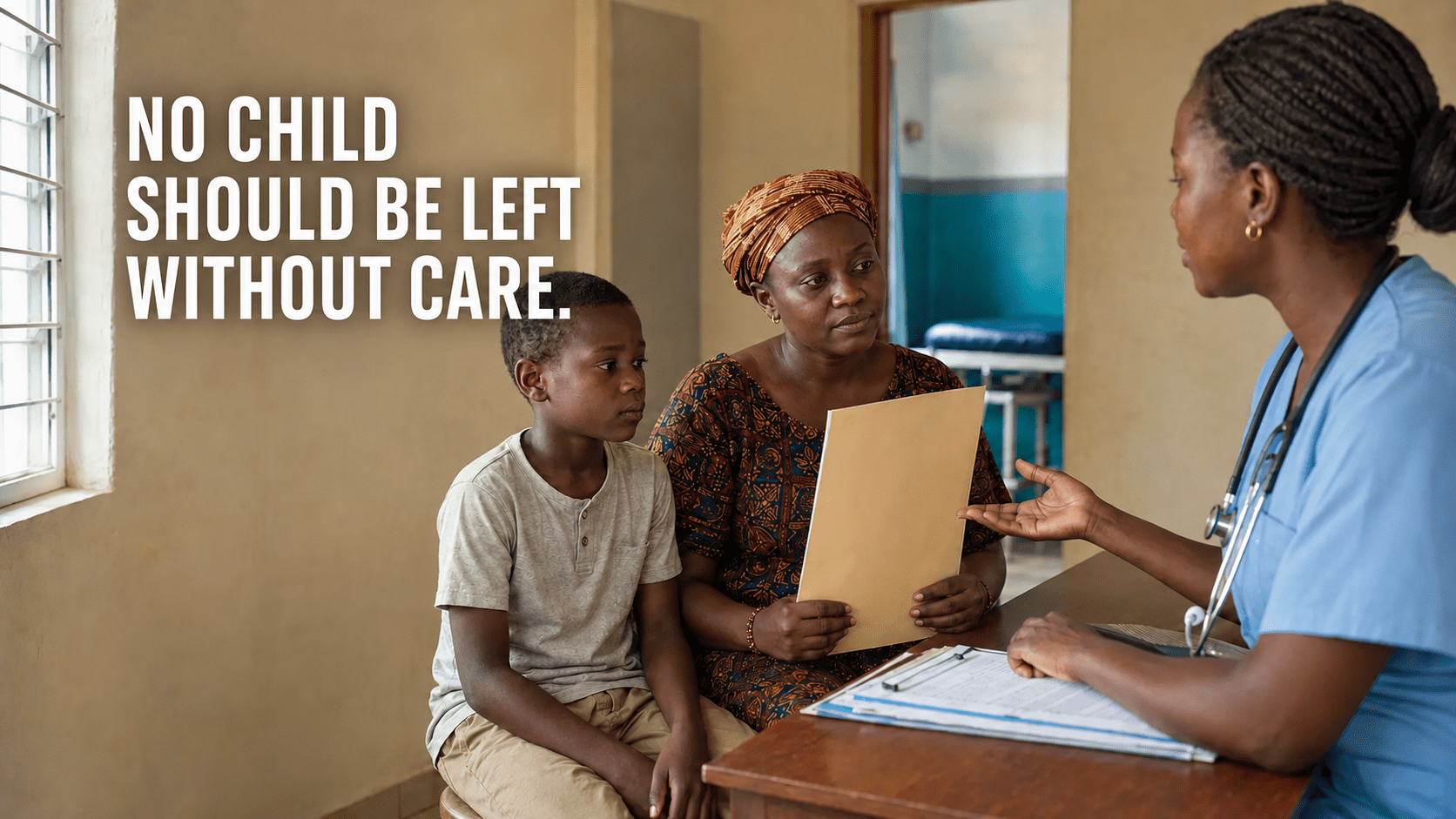
A child wakes up with a fever. By afternoon, the fever has not gone down. A caregiver takes the child to a clinic, hoping for help. Then comes the question no vulnerable child should have to face:
Who will pay?
During our visits to children’s homes in Togo and Benin, caregivers raised a painful concern. A home may be registered with the authorities, and a child may be known to social services, but the home’s registration does not automatically confirm that every child has been individually enrolled in a health-coverage programme.
When paperwork stands between a child and treatment
The official programmes in both countries connect coverage to individual eligibility.
In Togo, School AMU is linked to regular enrolment in a public school. In Benin, ARCH coverage is linked to beneficiaries who have been identified and enrolled.
A child’s access may therefore depend on school records, identification documents, individual enrolment, the healthcare facility visited and the treatment covered by the programme.
When a document is missing or enrolment has not been completed, a caregiver may have to resolve the child’s eligibility before coverage can be confirmed.
Meanwhile, the child is still sick.
Any consultation, test, medicine or hospitalization that is not covered can become the responsibility of the children’s home. Yet many homes already struggle to provide food, clothing, education and daily care.
An unexpected medical bill can be more than their small budget can carry.
The caregiver begins calling supporters. The pharmacy is asked to wait. Treatment may be delayed while the child’s condition becomes more serious.
Progress exists—but some children can still fall through the gaps
Both countries have taken important steps toward broader healthcare protection.
In Togo, School AMU offers healthcare coverage to regularly enrolled students in public schools. During school holidays, children may present a school card, report card, school booklet or enrolment certificate to continue receiving covered care. This is confirmed by Togo’s National Health Insurance Institute and the official Togolese government portal.
In Benin, ARCH provides health coverage for identified and enrolled vulnerable people. The World Health Organization reported that, by December 2022, 867,944 people from the poorest groups had been enrolled and could receive free treatment in public health facilities. The programme and its beneficiaries are also described by Benin’s National Social Protection Agency and the World Health Organization.
These programmes matter. They save lives and reduce suffering.
But their official eligibility requirements also show why registering a children’s home should not be confused with automatically enrolling every child living there.
A child should never have to become an emergency before the system sees them.
Behind the word “orphanage” is a child
We often speak about institutions, programmes and eligibility. But behind every file is a child who may already have experienced loss, separation or instability.
That child should not also carry the fear that becoming sick will make them a burden.
RefugeRoot believes every child admitted to a registered children’s home should be connected quickly to appropriate healthcare coverage.
There should be a simple enrolment process, clear guidance for caregivers and an emergency pathway when documents are incomplete or treatment cannot wait.
This is not a request for special treatment.
It is a call to ensure that vulnerable children receive the protection these programmes were created to provide.
No child should be left without care.
Help make care reachable
Your support helps RefugeRoot stand with vulnerable children and the local organizations caring for them. Together, we can respond to urgent needs while advocating for stronger and more accessible protection.